China Top Robotic Surgery Systems Manufacturers
China has become an important base for developing and manufacturing robotic surgery systems. Its medical technology sector combines engineering talent, electronics production, software development, and expanding clinical partnerships. This article introduces leading Chinese manufacturers and examines what makes their systems credible in real operating environments.
The review considers system design, surgical precision, imaging integration, instrument flexibility, and training support. It also looks at regulatory documentation, quality management, clinical evidence, and after-sales service. These details matter when a hospital evaluates a robotic platform. A smooth console is not enough. Surgeons also need stable software, responsive instruments, clear visualization, and dependable technical assistance during demanding procedures.
No manufacturer is perfect. Product maturity, international approvals, hospital experience, and published evidence can vary widely. Some companies may show impressive prototypes but limited long-term clinical use. That difference deserves careful attention. The strongest suppliers usually demonstrate consistent manufacturing controls, transparent product information, and practical collaboration with surgeons. Buyers should compare total ownership costs, maintenance requirements, training resources, and compatibility with existing operating rooms. This approach helps separate genuine capability from polished marketing. It also acknowledges an important limitation: public information may not fully reveal a system’s clinical performance. Readers should verify current certifications, hospital references, and independent evaluations before making decisions. In this context, China’s top robotic surgery systems manufacturers should be assessed through evidence, usability, safety, and sustained professional support, rather than reputation alone.
Market Overview of China’s Robotic Surgery Systems Industry
China Top Robotic Surgery Systems Manufacturers
China’s robotic surgery systems industry is expanding through hospital investment, clinical demand, and domestic engineering capabilities. Large tertiary hospitals are the main users, especially in major medical centers. Provincial hospitals are also increasing purchases as surgical technology becomes more accessible. The market is developing quickly. Not everywhere.
Manufacturers compete through system precision, surgeon interfaces, imaging integration, and after-sales support. A reliable platform must perform steadily during long procedures, where arm movement and instrument control matter greatly. Hospitals also examine training programs, maintenance response, disposable instrument costs, and operating-room compatibility. Clinical evidence is becoming more important than promotional claims. Procurement teams increasingly review procedure outcomes, learning curves, and total ownership costs before signing contracts.
The market still faces uneven adoption. Smaller hospitals may lack trained teams, suitable operating rooms, or stable budgets. Surgeons need repeated practice, not a single demonstration. China’s regulatory requirements also demand careful product evaluation and documented clinical performance. Some manufacturers are improving local supply chains, software development, and service networks. However, technical progress does not automatically create better patient care. Hospitals must match each system with real surgical needs, staff capacity, and regional demand. This remains a practical weakness worth examining.
Core Technologies Used in Chinese Robotic Surgery Systems
China Top Robotic Surgery Systems Manufacturers
Core Technologies Used in Chinese Robotic Surgery Systems
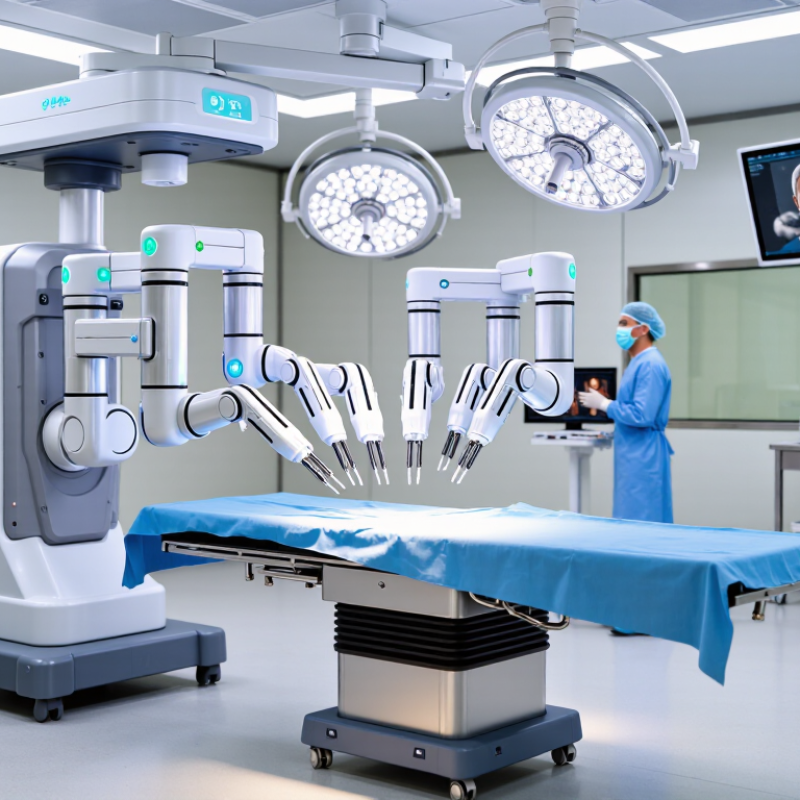
Chinese robotic surgery systems combine mechanical precision with digital imaging and surgeon-controlled instruments. A typical platform uses a surgeon console, patient-side robotic arms, and a high-definition three-dimensional endoscope. Motion scaling converts large hand movements into smaller instrument movements inside the body. Tremor filtration adds another layer of control.
Optical tracking helps the system monitor each instrument’s position in real time. Some platforms also explore force-sensing technology, which can estimate tissue resistance during delicate procedures. This feedback remains technically difficult. Visual information is often clearer than tactile information, and that gap deserves careful clinical evaluation. Specialized wristed instruments can rotate through narrow spaces, while modular arm designs improve access around the operating table.
Artificial intelligence is entering selected functions, including image recognition, surgical navigation, and procedure recording. However, these tools should support trained clinicians rather than replace judgment. Reliable systems require software verification, emergency manual controls, secure data handling, and stable communication between the console and robotic arms. Hospitals also assess sterilization workflows, instrument durability, maintenance response, and staff training.
In practical operating rooms, performance depends on more than elegant engineering. A precise system can still create delays if setup is complex. Chinese manufacturers are therefore adapting interfaces, service networks, and training programs to local hospital conditions. Long-term evidence, transparent reporting, and cooperation with surgeons remain necessary, especially when evaluating force feedback, autonomous assistance, and real-world patient outcomes.
Leading Chinese Manufacturers and Their Product Portfolios
China’s robotic surgery systems manufacturers are expanding beyond single operating platforms. Their portfolios often include multi-arm surgical consoles, patient-side carts, and high-definition three-dimensional vision modules. Many systems support wristed instruments for suturing, dissection, and controlled tissue handling. Some manufacturers also develop bipolar energy tools, monopolar instruments, staplers, and smoke evacuation equipment. These components can shape the practical value of a complete surgical solution.
Hospital buyers should examine the entire product ecosystem. Chinese suppliers increasingly offer simulation trainers, procedure libraries, instrument tracking, and remote technical support. Some provide modular systems for urology, gynecology, thoracic surgery, and general surgery. Others focus on compact designs for hospitals with limited operating-room space. Product documentation should clearly describe sterilization cycles, instrument lifespan, software updates, and service response times. These details matter more than impressive demonstrations.
Not every portfolio is equally mature. A polished brochure can hide gaps in clinical workflow or maintenance capacity. Experienced evaluation teams should review usability with surgeons, nurses, and biomedical engineers. They should also verify applicable NMPA registration, quality-management certification, and local market requirements. Reliable manufacturers provide traceable testing records and transparent training plans. Still, early product feedback may be limited, so procurement decisions require caution. The strongest portfolios balance technical ambition with dependable support after installation.
Regulatory Standards, Innovation Trends, and Global Expansion
China Top Robotic Surgery Systems Manufacturers: Regulatory Standards, Innovation Trends, and Global Expansion
China’s robotic surgery manufacturers are moving from prototype development toward evidence-based commercialization. The NMPA expects documented clinical performance, cybersecurity controls, traceable manufacturing, and quality systems aligned with ISO 13485. Electrical safety and software lifecycle requirements also follow relevant IEC standards. A functioning robot is not enough. Hospitals need reliable maintenance records, surgeon training, and clear risk controls.
Innovation is becoming more practical. Manufacturers are improving haptic feedback, compact instrument arms, imaging integration, and AI-assisted planning. According to Fortune Business Insights, the global surgical robotics market may grow from about USD 7.4 billion in 2023 to USD 18.2 billion by 2030. IFR reported approximately 9,300 medical robots installed worldwide in 2022, showing stronger clinical demand. Yet market estimates differ because reports define surgical robotics differently. That gap deserves attention.
Global expansion requires more than translating manuals. Chinese suppliers must prepare clinical evidence for European and North American pathways, including cybersecurity documentation, post-market surveillance, and local service capacity. Grand View Research has projected strong double-digit growth for surgical robotics through 2030, but adoption remains uneven across hospitals. Smaller facilities may struggle with training costs and operating-room redesign. This is the uncomfortable part. Technical progress can move faster than clinical readiness. Manufacturers that share transparent performance data, report limitations, and adapt to local regulations will build more durable trust.