
Why Choose Surgery Home Care Products for Global Buyers?

Why Choose Surgery Home Care Products for Global Buyers?

Healthcare is moving closer to the patient’s front door. The World Health Organization reports that one in six people worldwide will be aged 60 or older by 2030. This shift increases demand for safe recovery products, including wound-care supplies, mobility aids, monitoring devices, and caregiver essentials. The Global Home Healthcare Market Report by Grand View Research valued this market at approximately USD 390 billion in 2023. It also projects continued growth through 2030.

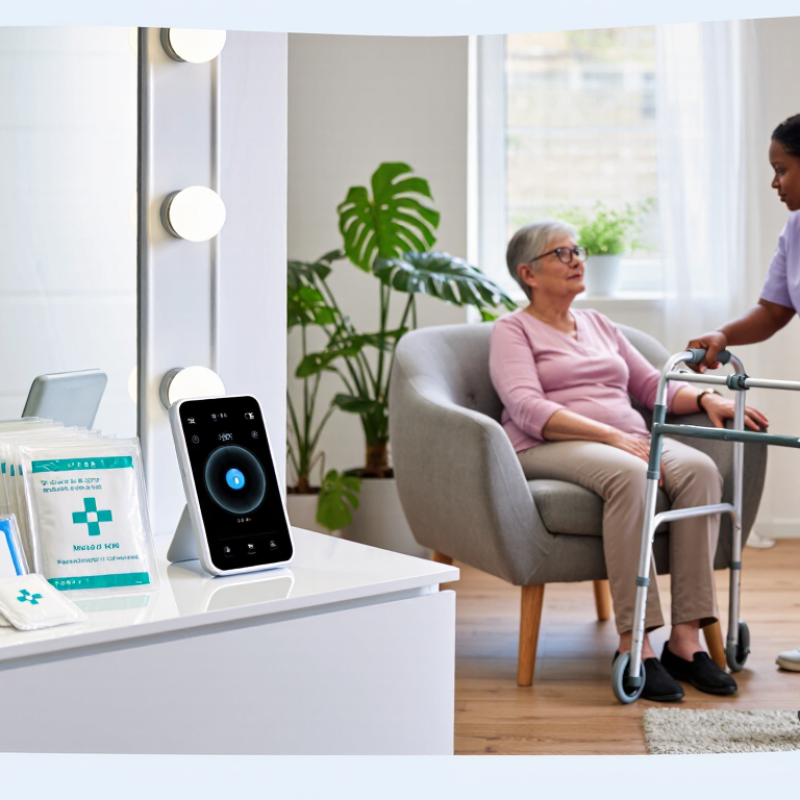
The need is practical. A clean dressing table, a clearly labeled package, and an easy-to-use monitoring device can reduce confusion after discharge. Surgery home products help families manage recovery under professional guidance. They do not replace surgeons, nurses, or clinical judgment. That distinction matters.

Dr. Joseph Kvedar, a recognized digital-health and home-care expert, has described the home as “the next frontier of health care.” His view supports a wider industry trend: care is becoming more connected, personal, and measurable. For global buyers, however, low prices are not enough. ISO 13485 quality systems, traceable materials, multilingual instructions, reliable packaging, and documented testing deserve close attention. WHO surgical-safety guidance also reinforces the importance of communication and process control.

The category is still imperfect. Some products look advanced but feel awkward in real homes. Others lack clear instructions or dependable after-sales support. Responsible buyers should examine evidence, usability, regulatory fit, and supplier experience before purchasing. Surgery home care products earn trust through details: secure seals, readable labels, stable sensors, and support that answers quickly.
Why Choose Surgery Home Care Products for Global Buyers?

What Are Surgery Home Care Products?

Why Choose Surgery Home Care Products for Global Buyers?

What Are Surgery Home Care Products?

Surgery home care products are supplies that support recovery after a patient leaves a hospital. They may include wound dressings, sterile gauze, compression items, disposable gloves, mobility aids, cold therapy packs, and simple monitoring devices. These products should follow a clinician’s care plan. They do not replace medical advice.

The need is growing. The World Health Organization reports that about one in ten patients experiences harm during healthcare, and over half of this harm is preventable. Its 2024 Global Patient Safety Report highlights safer care across every setting, including the home. WHO also expects one in six people worldwide to be aged 60 or older by 2030. For global buyers, this points to stronger demand for practical, easy-to-use recovery supplies. Still, demand alone proves nothing. A neat package can fail if instructions are unclear or the dressing does not suit the wound.

Tips: Check sterility, material details, expiration dates, packaging strength, and traceability records. Ask whether products support ISO 13485-based quality systems. Review local registration and labeling rules before importing. Test opening and use with real caregivers. Small usability problems matter. They can cause avoidable mistakes. Also, confirm storage conditions, language requirements, and replacement availability. WHO guidance supports patient education, but education is often treated as an afterthought. That deserves reconsideration.

Which Home Care Needs Do These Products Address?

Surgery home care products address practical needs after a patient leaves clinical care. Wound dressings help protect incisions from friction, moisture, and everyday contamination. Skin-friendly adhesives matter because frequent removal can cause redness or small tears. Some patients also need compression supports, disposable underpads, or gentle cleansing supplies.

Recovery can make movement difficult. Walking aids, shower chairs, bed supports, and easy-grip tools reduce unnecessary strain during daily routines. Home monitoring devices may help track temperature, blood pressure, or oxygen levels when clinicians recommend them. Clear instructions are essential. A product can be well designed, yet confusing packaging may lead to incorrect use.

Global buyers should assess more than price. They need consistent materials, sealed packaging, batch traceability, and instructions in suitable languages. Storage conditions also matter. Heat and humidity can affect certain dressings and medical supplies during shipping. Local healthcare professionals should confirm product suitability, especially for patients with allergies, diabetes, or limited mobility. Regulations differ between markets, so documentation must be checked carefully.

Small details often decide comfort. A dressing that stays secure overnight can reduce anxiety. Still, no home care product replaces medical advice. A checklist helps, but it can miss personal habits, home layout, or caregiver skill. That gap deserves honest review.

How Do Surgery Home Care Products Support Recovery?

After discharge, recovery often continues beside a kitchen table, not inside a hospital ward. Surgery home care products can support wound protection, mobility, hygiene, and medication routines when used correctly. The World Health Organization’s 2016 global guideline review cites an estimated 11% incidence of surgical site infections worldwide. Clean dressings, disposable gloves, and hand hygiene supplies help limit avoidable contamination during routine care.

These items do not replace clinical assessment. Redness, unusual odor, fever, drainage, or increasing pain requires prompt medical advice.

Recovery also depends on safe movement. The World Health Organization estimates that 2.41 billion people worldwide could benefit from rehabilitation, including many surgical patients (WHO, 2022). Adjustable supports, shower chairs, raised toilet seats, and walking aids can make daily movements less demanding. However, product fit matters. A tight abdominal binder may restrict breathing, while an unstable walking aid may increase fall risk. Small details matter. Qualified clinicians should guide product selection, especially after orthopedic, abdominal, or vascular procedures. Global buyers should verify material safety, cleaning instructions, weight limits, and local regulatory documents. A product can look clinically serious and still fit poorly. Home recovery works best when products follow a personalized discharge plan, rather than simply filling a shopping cart.

What Should Global Buyers Consider When Choosing Them?

Global buyers should assess surgery home care products beyond unit price. Home recovery is not simply hospital care moved indoors. Products may include wound dressings, compression supports, cold therapy devices, and mobility aids. Each item should match the patient’s procedure, mobility level, and caregiver skills.

Safety evidence deserves close attention. The World Health Organization’s Global Patient Safety Report 2024 states that one in ten patients experiences harm in healthcare, with more than half considered preventable. Buyers should request clinical evidence, material specifications, usability testing, and clear instructions. Packaging should protect sterile or clean components during long-distance transport. Instructions also need simple language and visual guidance. Small details matter.

Check regulatory documentation for every target market. ISO 13485 certification supports quality management, but it does not replace product-specific compliance. The United Nations World Social Report 2023 projects that people aged 60 and above will reach 16% of the global population by 2050. This trend increases demand for products that older users can open, position, and clean safely. A low unit price can look attractive, yet it may hide training, replacement, or disposal costs. I would not treat every supplier document as proof. Buyers should verify test dates, batch traceability, complaint handling, and after-sales response times. In real procurement, the best choice may be less sophisticated, but easier to use correctly.

How Can Buyers Evaluate Suppliers and Product Quality?

Global buyers should assess suppliers through evidence, not attractive product pages. For surgery home care products, request company registration, quality certificates, test reports, and production records. Documents should match the actual factory and product category. Check certificate numbers through recognized issuing bodies when possible. A valid certificate does not prove every item is safe. Ask whether inspections cover materials, dimensions, cleanliness, labeling, and packaging.

Product samples deserve close attention. Order samples from the same production line used for bulk orders. Inspect seams, edges, closures, absorbency, and package seals. For products requiring sterile conditions, verify sterilization records and shelf-life testing. A lot number should connect the item to materials, operators, and inspection results. Traceability matters. Ask how complaints are recorded and how defective batches are handled. During a factory review, observe storage areas, humidity control, worker hygiene, and rejected-product separation. Photos can help, but they are not enough. An independent inspection may reveal details remote discussions miss.

Supplier communication also shows reliability. Clear answers are useful, but specific evidence is stronger. A polished catalogue can still hide weak controls. Price comparisons should include testing, packaging, replacement terms, and delivery risks. Buyers should record unanswered questions instead of assuming good intentions. The evaluation will not be perfect. Careful review reduces avoidable surprises.

Why Choose Surgery Home Care Products for Global Buyers? - How Can Buyers Evaluate Suppliers and Product Quality?

A practical quality and supplier evaluation framework for surgical and home-care product sourcing

Evaluation Dimension Relevant Products Quality Requirement or Benchmark Supplier Evidence to Request Buyer Verification Action
Regulatory classification Dressings, wound-care kits, gloves, syringes, thermometers, blood-pressure monitors Classification and registration must match the intended market and product claims. Requirements differ by jurisdiction. Product classification, intended-use statement, market authorization or registration documents, and conformity assessment records where applicable Check that the legal manufacturer, product name, model, intended use, and destination market are consistent across all documents.
Quality management system All regulated medical devices and sterile consumables A documented medical-device quality system aligned with ISO 13485:2016 is a strong supplier-screening benchmark. Current ISO 13485 certificate, certification scope, issuing body, audit status, and manufacturing-site address Verify certificate validity and scope with the certification body or an independently accessible certificate database.
Risk management Devices used for wound care, injections, monitoring, mobility, and post-operative recovery Product risks should be identified, controlled, and reviewed throughout the product life cycle in accordance with ISO 14971 principles. Risk-management summary, hazard analysis, essential performance controls, complaint history, and corrective-action records Confirm that foreseeable misuse, infection, breakage, leakage, incorrect readings, and user-error risks are addressed.
Biocompatibility Wound dressings, adhesive tapes, catheters, syringes, masks, and products contacting skin or tissue Materials should be evaluated for the nature and duration of body contact using the ISO 10993 series as applicable. Material specifications, supplier declarations, biocompatibility evaluation, and applicable test reports Compare the tested material, color, adhesive, coating, and contact duration with the actual production sample.
Sterility assurance Sterile dressings, surgical packs, syringes, procedure kits, and invasive accessories The sterilization method must be validated for the product and packaging. Common standards include ISO 11135 for ethylene oxide and ISO 11137 for radiation sterilization. Sterilization validation summary, routine-cycle records, biological or dosimetry monitoring records, and sterility-release procedure Confirm lot traceability, sterilization date, expiry basis, sterile-barrier integrity, and the absence of damaged packaging.
Packaging and shelf life Sterile and non-sterile consumables, diagnostic accessories, and home-care kits Packaging should protect the product during transport and storage. Shelf life must be supported by stability or package-integrity evidence rather than a generic claim. Packaging specifications, transport testing, aging or stability data, storage conditions, and packaging-seal validation Perform visual inspection, seal-strength checks where applicable, and sample testing after simulated shipping conditions.
Functional performance Blood-pressure monitors, pulse oximeters, thermometers, nebulizers, and mobility-support devices Measured performance should meet the product’s declared specifications and applicable device standards; electrical medical equipment commonly requires consideration of IEC 60601-1. Performance test reports, calibration records, software version information, electrical-safety tests, and user instructions Use calibrated reference equipment and conduct incoming inspection on accuracy, alarms, power supply, controls, and accessories.
Materials and chemical safety PVC components, adhesives, plastics, metal instruments, disinfectant accessories, and packaging materials Materials should be consistent with the approved specification and applicable chemical restrictions in the destination market. Bill of materials, material safety information, restricted-substance declaration, and change-control procedure Request written notification before material or subcontractor changes and test high-risk materials when necessary.
Labeling and instructions All products supplied for home use or professional care Labels should clearly state intended use, warnings, lot or serial identification, expiry where applicable, storage conditions, and manufacturer information. ISO 15223-1 and ISO 20417 provide widely used labeling and information principles. Artwork master, instructions for use, translated versions, symbols list, and label-control procedure Review language accuracy, legibility, units of measurement, warning placement, and consistency with the approved product documentation.
Traceability and batch control Sterile products, diagnostic devices, electronic monitors, and products with expiry dates Each shipment should be traceable to a production lot or serial number, raw materials, inspection records, and release decision. Lot records, certificate of conformity, inspection report, serial-number format, and recall procedure Match carton, unit packaging, inspection documents, and shipping records before acceptance.
Supplier consistency Private-label, OEM, and recurring-volume purchasing programs The approved sample, mass-production output, packaging, and documentation should remain consistent across batches. Quality agreement, approved sample, inspection plan, process-flow chart, change-notification policy, and subcontractor list Use pre-shipment inspection, random sampling, defect classification, and periodic supplier re-evaluation.
After-sales support and complaint handling Electronic devices, reusable instruments, home-care equipment, and products requiring user training The supplier should provide technical support, spare-part or replacement arrangements where relevant, and a documented complaint and corrective-action process. Complaint procedure, response-time commitments, troubleshooting guides, repair policy, training materials, and field-safety notification process Test response quality with a pre-order support request and define escalation contacts in the supply agreement.
Total landed cost and logistics All imported surgical and home-care products Purchase price is only one cost element; buyers should also consider inspection, freight, insurance, customs duties, storage, product loss, and compliance costs. Commercial quotation, packaging dimensions, carton quantity, lead time, Incoterms, production capacity, and shipping documentation Compare suppliers using landed cost, delivery reliability, minimum order quantity, remaining shelf life at arrival, and documented quality performance.

Buyer note: Regulatory requirements, product classification, labeling rules, and accepted conformity routes vary by destination market. Buyers should confirm the applicable requirements with the relevant authority or qualified regulatory professional before placing an order.