Top 10 Types of Surgery Home Care Equipment for Buyers?

Recovering after surgery does not end when a patient leaves the hospital. At home, a narrow hallway, loose rug, or low chair can quickly become a safety concern. The right surgery home equipment can support mobility, hygiene, wound care, breathing, and caregiver confidence. However, equipment should match the procedure, recovery stage, home layout, and clinical instructions.

The Lancet Commission on Global Surgery estimated that five billion people lack access to safe, affordable surgical and anesthesia care. This highlights why safe recovery systems matter beyond operating rooms. The World Health Organization’s Global Patient Safety Action Plan 2021–2030 also emphasizes coordinated care, communication, and risk reduction. In practice, these principles may involve a raised toilet seat, adjustable hospital bed, transfer board, walker, shower chair, pulse oximeter, or prescribed oxygen equipment. Each item has a specific purpose. None replaces professional assessment.

This guide examines the top 10 types of surgery home care equipment for buyers. It considers usability, adjustability, cleaning, durability, storage, and caregiver workload. It also separates essential tools from attractive but unnecessary products. That distinction matters. A technically advanced device may fail if instructions are unclear or batteries are unavailable. Buyers should confirm recommendations with surgeons, nurses, therapists, or licensed medical suppliers. Local regulations and reimbursement rules can differ. No list fits every patient. That is worth admitting. A careful buyer measures doorways, checks weight limits, and plans for changing needs before placing an order.
Top 10 Types of Surgery Home Care Equipment for Buyers?

Defining Surgery Home Care Equipment and Buyer Requirements

Top 10 Types of Surgery Home Care Equipment for Buyers?

Surgery home care equipment supports recovery after discharge, not hospital-level treatment. It includes adjustable beds, pressure-relief mattresses, walkers, wheelchairs, transfer boards, commodes, shower chairs, oxygen equipment, wound-care supplies, and vital-sign monitors. The World Health Organization reports that more than 2.5 billion people need assistive products globally, with demand expected to exceed 3.5 billion by 2050 (WHO, Global Report on Assistive Technology, 2022). This figure shows why buyers should treat equipment selection as a care decision, not a simple purchase.

Choosing the right equipment Start with the patient’s procedure, mobility, pain level, and living space. A shower chair needs stable legs and enough bathroom clearance. A walker must match the user’s height and weight. A bed may require side rails, adjustable positioning, and easy cleaning.

Check whether the equipment needs a prescription, trained installation, battery backup, or professional servicing. The FDA warns that pulse oximeter readings can be affected by circulation, skin pigmentation, movement, and other factors (FDA, Pulse Oximeter Basics). One reading is not enough. Buyers should also confirm infection-control instructions, return policies, caregiver training, and local electrical requirements.

I have seen planning focus too heavily on the device itself. That assumption is often wrong. A technically suitable product can still fail in a narrow bedroom or without reliable daily support.

Mobility, Transfer, and Positioning Equipment for Postoperative Safety

Top 10 Types of Surgery Home Care Equipment for Buyers

Mobility, Transfer, and Positioning Equipment for Postoperative Safety

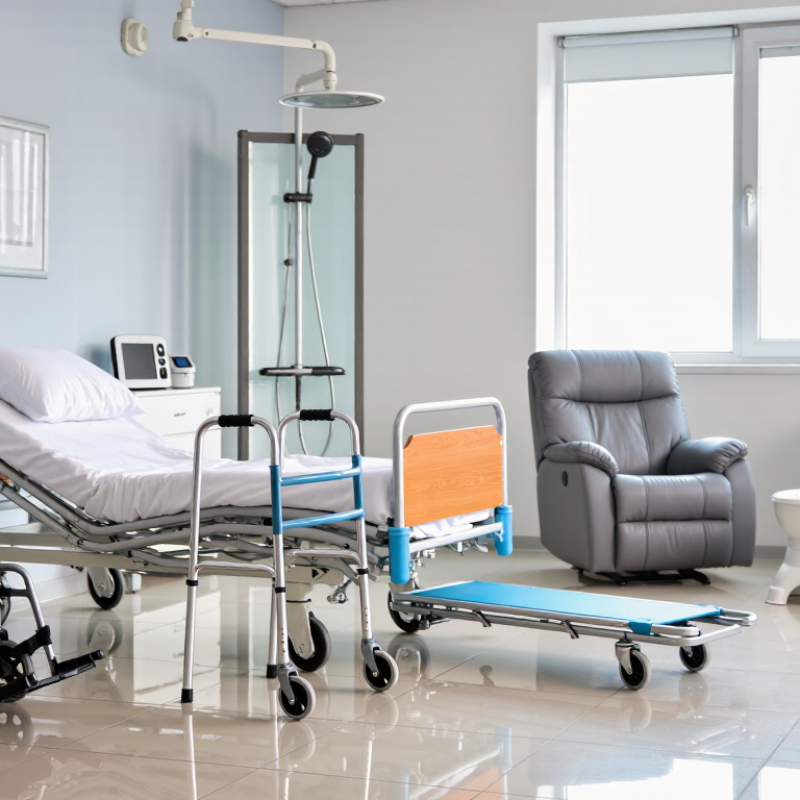
After surgery, safe movement often depends on the right home care equipment. A walker can provide stable support during short trips across a bedroom. Crutches may suit some patients, but they require balance, arm strength, and correct height adjustment. Wheelchairs help conserve energy when walking becomes painful or unsafe.

Small details matter. Transfer boards can reduce twisting between a bed and wheelchair. A properly fitted gait belt may help a trained caregiver guide standing movements. Never pull a patient by the arms. That common shortcut can cause pain, falls, or shoulder strain. A bedside commode may also reduce nighttime walking, especially when the bathroom is far away.

Positioning equipment supports comfort and skin protection during recovery. An adjustable bed can simplify lying down and standing up. Wedge cushions may improve alignment, but excessive elevation can affect breathing or surgical comfort. Pressure-relieving mattresses and heel protectors can reduce prolonged pressure. Bed rails require careful assessment, since they may create climbing risks for some users.

A home assessment should include floor height, doorway width, lighting, and caregiver ability. Not every device fits. Equipment should match the procedure, weight-bearing limits, pain level, and discharge instructions. A physical or occupational therapist can check transfers before the patient returns home. Reassess the setup after a few days. Recovery changes quickly, and yesterday’s safe position may feel awkward today.

Top 10 Types of Surgery Home Care Equipment for Buyers? - Mobility, Transfer, and Positioning Equipment for Postoperative Safety

Equipment Type Primary Function Best-Suited Postoperative Needs Typical Weight Capacity Key Safety Features Mobility or Positioning Benefit Important Buyer Considerations
Adjustable Homecare Bed Raises the head, knees, or entire sleeping surface to support rest, transfers, feeding, and personal care. Abdominal, orthopedic, cardiac, and lower-limb surgery recovery. Approximately 350–600 lb (159–272 kg), depending on model. Locking casters, side rails or assist rails, emergency backrest lowering, and stable height adjustment. Reduces effort when moving from lying to sitting and helps caregivers provide care at a safer working height. Check mattress compatibility, rail design, power-failure operation, electrical requirements, room dimensions, and delivery access.
Bedside Commode Provides a nearby toileting option when walking to the bathroom is difficult or unsafe. Early recovery after hip, knee, spine, or abdominal procedures. Commonly 250–400 lb (113–181 kg). Non-slip feet, locking wheels on mobile versions, secure armrests, and a stable seat frame. Shortens transfer distance and may reduce falls caused by urgent bathroom trips. Confirm seat height, opening size, bucket or pail cleaning requirements, clearance around the bed, and user transfer ability.
Front-Wheeled Walker Offers a broad support base for walking while allowing the user to advance the device step by step. Lower-extremity surgery, balance limitations, and weight-bearing restrictions. Often 250–350 lb (113–159 kg). Height-adjustable legs, secure hand grips, non-skid tips, and correctly fitted glide caps or wheels. Improves stability during short-distance ambulation and reduces reliance on furniture for support. Fit the handle height to the wrist crease when standing upright, verify the prescribed weight-bearing status, and measure doorways.
Rollator Walker Supports continuous walking with four wheels, hand brakes, a seat, and often a storage basket. Patients who can walk but need rest breaks or additional balance support. Commonly 250–400 lb (113–181 kg). Loop-lock brakes, parking brake function, ergonomic grips, reflective elements, and a stable frame. Allows seated rest during recovery and supports controlled movement over longer indoor or outdoor distances. Not appropriate for every patient or non-weight-bearing condition; assess braking strength, seat height, wheel size, and terrain.
Transfer Board Creates a firm bridge between two surfaces to assist lateral transfers when standing is limited. Wheelchair-to-bed, bed-to-chair, or chair-to-commode transfers after lower-body or spinal surgery. Frequently rated around 250–400 lb (113–181 kg). Smooth edges, adequate length, strong construction, non-slip surfaces or stabilizing features, and proper positioning. Can reduce lifting by allowing a controlled sliding transfer across a small gap. Professional instruction is important; consider user height, transfer distance, skin integrity, clearance, and caregiver assistance.
Patient Transfer Lift Uses a mechanical lifting system and sling to move a person between bed, chair, wheelchair, or commode. Limited strength, poor balance, paralysis, or inability to safely stand after surgery. Many homecare models support approximately 300–450 lb (136–204 kg). Emergency lowering, locking casters, spreader-bar safety, secure sling attachment points, and a charged battery for powered models. Reduces manual lifting and caregiver injury risk during transfers. Requires correct sling sizing, adequate floor space, caregiver training, maintenance checks, and confirmation that the lift fits under the bed or chair.
Gait Belt Provides a secure handhold for a trained caregiver assisting with standing or walking. Short-distance assisted ambulation when the patient can bear weight but remains unsteady. Use according to the manufacturer’s stated load rating and patient assessment. Strong buckle, secure closure, suitable width, intact stitching, and placement around the waist rather than over an incision. Improves caregiver control without pulling the patient’s arms or shoulders. It is not a lifting sling; avoid use around abdominal wounds, feeding tubes, or painful areas, and obtain professional instruction.
Reclining Lift Chair Assists the user from sitting to standing and provides supported reclining for rest. Knee, hip, back, and other surgeries that make low chairs difficult to use. Often 300–500 lb (136–227 kg). Stable base, controlled lifting mechanism, emergency battery backup where applicable, side controls, and sufficient arm support. Reduces the force needed to rise and helps maintain a comfortable, elevated leg position. Measure room clearance, check seat width and height, confirm recline clearance from walls, and consider power access and upholstery cleaning.
Wheelchair with Elevating Leg Rests Provides seated mobility while supporting the lower legs in an elevated position. Lower-limb surgery, reduced endurance, and temporary non- or partial-weight-bearing recovery. Commonly 250–400 lb (113–181 kg). Wheel locks, anti-tippers, footrest retention, lap support when clinically appropriate, and correctly inflated tires. Allows movement without walking and can accommodate prescribed leg elevation. Check seat width and depth, turning radius, ramp access, transport needs, footrest length, and whether the patient can propel the chair.
Positioning Wedges and Support Pillows Supports the back, legs, knees, or surgical area to maintain a safer and more comfortable posture. Pressure management, limb elevation, side-lying support, and sleep positioning during recovery. Select products designed for the user’s body size and intended support position. Stable high-density foam, washable covers, breathable materials, and shapes that maintain alignment without restricting circulation. Helps reduce sliding, twisting, pressure on sensitive areas, and unwanted joint movement. Follow the surgical team’s positioning instructions; inspect skin regularly and avoid placing pressure directly on incisions or impaired circulation areas.

Buyer note: Weight capacities and product features vary by model. Equipment should be selected and fitted according to the patient’s surgical restrictions, home layout, functional ability, and guidance from a qualified healthcare professional.

Wound Care, Hygiene, and Daily Living Support Equipment

Surgery home care equipment should support wound care, hygiene, and daily living without creating new hazards. The World Health Organization’s Global Report on Assistive Technology (2022) estimates that more than 2.5 billion people need assistive products. That number may exceed 3.5 billion by 2050.

For buyers, the useful ten categories include sterile dressing supplies, wound-measuring tools, waterproof protectors, shower chairs, commodes, raised toilet seats, bed tables, transfer boards, walkers, and reachers.

Equipment must match the patient’s mobility, incision location, and bathroom layout.

Wound supplies need clean storage, clear instructions, and easy disposal. A shower chair should have adjustable height, non-slip feet, and drainage space.

Transfer equipment requires caregiver training, not guesswork.

The CDC reports that more than one in four adults aged 65 and older falls each year. Therefore, unstable stools or poorly positioned rails can turn hygiene support into a serious risk.

I would not treat a standard checklist as a prescription. A patient with dizziness may need clinical reassessment before using a walker or commode.

Tips:

Ask the surgical team which dressings are appropriate. Measure doorways, bed height, and toilet clearance before buying. Check weight limits and cleaning instructions.

Keep frequently used items within arm’s reach. Inspect rubber tips and locks weekly. Small details matter. Even careful buyers can miss them.

Reassess equipment after swelling decreases, mobility improves, or pain changes.

WHO’s assistive technology findings also support involving users directly, because comfort and confidence strongly influence daily use.

Respiratory, Monitoring, and Medication Management Equipment

After surgery, home care equipment should match the patient’s discharge plan, mobility, and breathing needs. Ten commonly considered types include pulse oximeters, oxygen concentrators, nebulizers, incentive spirometers, blood pressure monitors, thermometers, glucose meters, portable ECG monitors, medication dispensers, and pill organizers. Each device serves a different purpose. None should replace clinical advice.

Respiratory equipment needs careful handling. A pulse oximeter can show oxygen saturation and pulse rate, but cold fingers may create unreliable readings. An incentive spirometer encourages slow, deep breaths after chest or abdominal surgery. Oxygen equipment and nebulizers require prescribed settings, clean tubing, and regular inspection. Small details matter. A loose mask can reduce treatment effectiveness.

Monitoring devices help families notice changes early. Record readings with the time, symptoms, and medication schedule. This creates useful information for follow-up visits. Medication organizers reduce confusion, while automated dispensers may support patients with memory problems. However, alarms can be missed, and compartments can be filled incorrectly. A second person should verify complex schedules when possible. Equipment also needs readable displays, backup batteries, and simple cleaning instructions. Buying the most advanced device is not always the safest choice. A less expensive, easier-to-use tool may support better daily care. Research should include clinical guidance, measurement accuracy, warranty terms, and local servicing options.

Evaluating the Top Ten Options for Safety, Fit, and Value

Choosing surgery home care equipment requires more than comparing prices. The top ten options include adjustable beds, overbed tables, shower chairs, commodes, transfer benches, walkers, wheelchairs, raised toilet seats, grab bars, and vital-sign monitors. Safety depends on correct height, weight capacity, locking mechanisms, and floor stability. The CDC reports that about one in 31 hospital patients has a healthcare-associated infection on any given day. Cleanable surfaces and simple storage therefore matter at home, too. AHRQ also emphasizes medication and transition risks after discharge.

Fit should reflect the patient, not an average user. A walker that is too tall can strain the shoulders. A shower chair without rubber feet may slide on wet tiles. Adjustable beds can improve repositioning, but they need enough room for caregivers. Value includes delivery, maintenance, training, and replacement parts. The WHO estimates that medication-related harm costs about 42 billion dollars globally each year. A basic monitor may support safer observation, but it cannot replace clinical advice. I would not treat every “medical-grade” label as proof of quality.

Tips: Measure doorways, bed height, toilet height, and turning space before buying. Ask a physiotherapist or discharge nurse to check the setup. Inspect bolts and wheels weekly. Keep emergency numbers visible. Avoid equipment that requires complicated instructions during pain or fatigue. The cheapest option may become expensive after one preventable fall. Pay attention to small details.