What is the Future of the Robotic Surgery Market?
The robotic surgery market is rapidly evolving. Advances in technology are reshaping surgical practices. Surgeons now use robots to perform complex procedures with precision and minimal invasiveness. This trend is gaining momentum, driven by increasing patient demands for better outcomes.
However, the future presents challenges. High costs of robotic systems limit widespread adoption. Many hospitals may hesitate to invest in such equipment. Training surgeons to operate these systems effectively is another hurdle. While robotic surgery enhances precision, the learning curve can pose risks.
As the market grows, several factors will influence its trajectory. Patient satisfaction hinges on improved safety and reduced recovery times. Continuous innovation is essential. Staying ahead requires a focus on affordable solutions. Institutions must balance benefits against investment challenges. Reflecting on these dynamics will shape the future of the robotic surgery market.

The Growth Trends in the Robotic Surgery Market Between 2023 and 2030
The robotic surgery market is experiencing significant growth. Between 2023 and 2030, it is expected to grow at a compound annual growth rate (CAGR) of approximately 20%. This surge can be attributed to advancements in technology and increasing adoption by hospitals. Reports indicate that the market size could reach over $20 billion by 2030.
The rise of robotic surgery is not without challenges. High costs of robotic systems may limit accessibility in smaller healthcare facilities. Additionally, training and adaptation remain obstacles for healthcare professionals entering this field. Many surgeons express concerns over potential complications and the need for extensive experience to operate these advanced systems effectively.
Patient outcomes have improved with robotic surgery, particularly in minimally invasive procedures. Techniques such as reduced recovery time and lower risk of infection make this method attractive. Nonetheless, ongoing discussions about the efficacy of robotic surgery versus traditional approaches are vital. The landscape may shift as further research emerges, influencing decision-making in operating rooms worldwide.
What is the Future of the Robotic Surgery Market? - The Growth Trends in the Robotic Surgery Market Between 2023 and 2030
| Year |
Market Size (USD Billion) |
CAGR (%) |
Key Trends |
| 2023 |
4.2 |
12.5 |
Increased adoption in minimally invasive procedures. |
| 2024 |
4.8 |
14.0 |
Expansion of robotic platforms for general surgeries. |
| 2025 |
5.5 |
15.2 |
Integration of AI and machine learning for improved accuracy. |
| 2026 |
6.3 |
16.5 |
Growth in robotic-assisted orthopedic surgeries. |
| 2027 |
7.2 |
17.8 |
Emergence of tele-surgery capabilities. |
| 2028 |
8.1 |
19.0 |
Increased investment in robotic surgical training programs. |
| 2029 |
9.2 |
20.2 |
Innovation in robotic systems for complex surgeries. |
| 2030 |
10.4 |
21.5 |
Widespread deployment in hospitals globally. |
Key Technological Innovations Driving the Future of Robotic Surgery
The future of the robotic surgery market is bright.
Key technological innovations are transforming surgical practices.
According to recent industry reports, the global robotic surgery market is projected to reach over $25 billion by 2025.
This growth is driven by advancements in robotic systems, AI, and imaging technologies.
One significant innovation is the development of smaller, more precise robotic instruments.
These tools enhance dexterity and reduce recovery times for patients.
Additionally, integration with AI allows for improved data analysis during surgeries.
It helps surgeons make real-time decisions, leading to better outcomes.
However, challenges remain.
Training healthcare professionals to operate these advanced technologies is essential.
If surgical teams lack proper training, patient safety could be compromised.
Moreover, tele-surgery, or remote robotic surgery, is gaining traction.
This technology allows surgeons to perform procedures from afar.
It can make surgical care more accessible in remote areas.
Still, concerns regarding the reliability of internet connections and equipment persist.
Overcoming these issues will be necessary for broader adoption of tele-surgery.
The robotic surgery market continues to evolve, fueled by these innovations and challenges.
Market Opportunities and Challenges for Robotic Surgery in Emerging Economies
The robotic surgery market presents numerous opportunities in emerging economies. As healthcare systems evolve, these countries seek advanced surgical solutions. Increased investment in healthcare infrastructure is essential. Many hospitals are keen to adopt robotic systems. However, the costs associated with these technologies can be prohibitive. Surgeries may become more effective, but the initial financial burden is significant.
Training healthcare professionals is another challenge. Skilled operators are necessary to ensure success with robotic surgeries. Emerging economies often face a shortage of trained personnel. Additionally, there may be cultural resistance to adopting these new technologies. Surgeons and patients alike might prefer traditional methods. These hurdles need addressing for the market to expand effectively.
Despite these challenges, the potential for growth is evident. Emerging economies could experience improved patient outcomes. Lower complication rates and shorter recovery times are appealing. However, access to these advanced technologies remains uneven. Bridging the gap is vital for unlocking the full potential of robotic surgery. Continuous assessment of these factors is crucial as the market evolves.
Future of the Robotic Surgery Market in Emerging Economies
Regulatory Landscape Impacting the Adoption of Robotic Surgery Systems
The regulatory landscape greatly influences the adoption of robotic surgery systems. Recent studies show that over 50% of healthcare providers cite regulatory hurdles as a significant barrier. Compliance with safety standards and clinical efficacy guidelines can be intricate. For instance, the FDA's rigorous approval processes often delay innovation in robotic systems.
Healthcare institutions often struggle with the complexities of these regulations. Many staff members lack training in understanding the regulatory framework. This gap can lead to potential safety risks and misuse of advanced technologies. Furthermore, a survey by the Global Robotics Surgery Network revealed that approximately 40% of hospitals still hesitate to invest due to unclear regulations.
Despite these challenges, the trend toward robotic surgery continues. The market is expected to grow at a rate of 23% annually over the next five years. Even with the challenges, experts believe revisiting and streamlining regulations could boost adoption rates. It would allow more hospitals to integrate this technology. However, the path ahead is filled with uncertainties and needs careful navigation.
Future Projections: Market Size and Investment Trends for Robotic Surgery
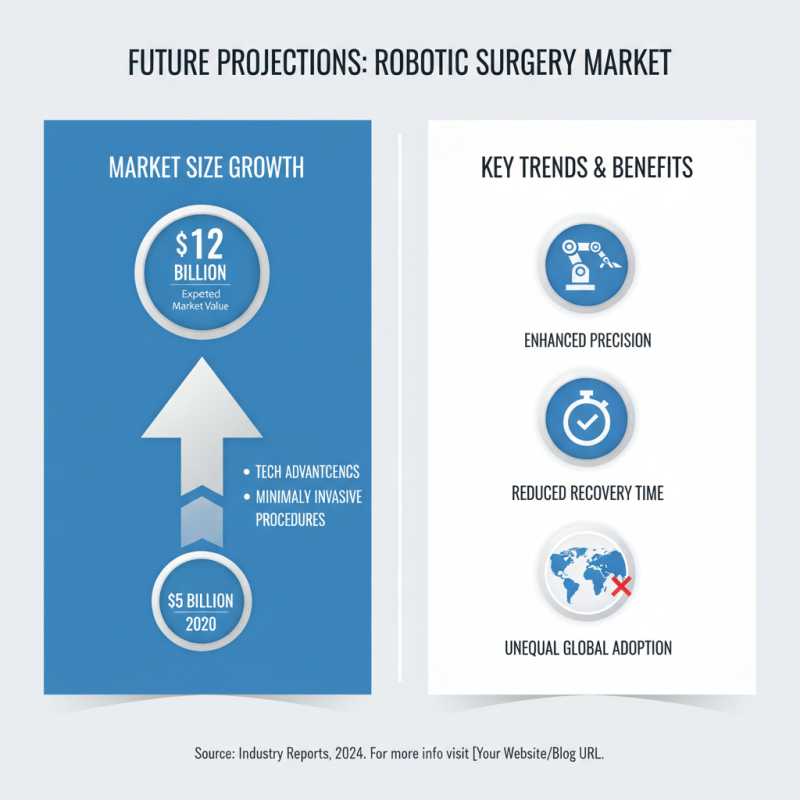
As the robotic surgery market evolves, projections indicate a significant growth trajectory. By 2025, this market is expected to reach approximately $12 billion, driven by advancements in technology and rising minimally invasive procedures. The integration of robotics in surgery enhances precision, reducing recovery time for patients. However, adoption remains uneven across various regions.
Investment trends show a surge in funding for research and development. In 2022, funding in this sector hit a record high, with private investments pouring in. Yet, operational costs can pose a barrier for many healthcare providers. Despite the impressive growth potential, hospitals face challenges in financing robotic systems. The cost of training surgeons adds another layer of complexity to the deployment of robotic assistance in operating rooms.
Market analysis reveals a 20% compound annual growth rate expected over the next few years. This is an optimistic outlook, but many institutions still hesitate. Concerns about the long-term effectiveness and return on investment in robotic surgeries linger. It’s crucial for stakeholders to address these uncertainties to foster broader acceptance in surgical practices.