What is the Future of Minimally Invasive Robotic Surgery in 2026?
The future of minimally invasive robotic surgery is promising. By 2026, experts predict significant advancements in this field. A report from MarketsandMarkets anticipates a compound annual growth rate (CAGR) of over 12% in the global robotic surgical system market. This reflects a growing acceptance among surgeons and patients of these technologies.
Minimally invasive robotic surgery offers numerous benefits. It reduces recovery time and minimizes trauma to the body. However, many hospitals still face challenges like high costs and the need for specialized training. The integration of artificial intelligence could enhance surgical precision. Yet, ethical concerns about reliance on machines must also be addressed.
As the technology progresses, so does the role of surgeons. The human touch in surgery remains vital. Balancing robotic assistance with surgical skill will be crucial. In conclusion, the landscape in 2026 may be shaped by innovation and ongoing debates about skill and ethics in minimally invasive robotic surgery.

Emerging Technologies in Minimally Invasive Robotic Surgery by 2026
Minimally invasive robotic surgery is set for transformative growth by 2026.
Emerging technologies promise to enhance precision and patient outcomes.
Innovations in imaging will allow surgeons to see in greater detail.
High-definition 3D visuals will guide instruments with pinpoint accuracy.
Intuitive control interfaces will streamline the surgical process.
New robotic systems may incorporate artificial intelligence.
AI could analyze real-time data to assist during procedures.
Machine learning algorithms will improve over time, making surgeries more efficient.
However, integrating these technologies poses challenges.
Training staff to adeptly use advanced tools is crucial.
Ensuring patient safety remains a top priority.
Overreliance on technology might lead to skill degradation among surgeons, a point of concern.
Some techniques are still in experimental stages.
This leads to uncertainty about reliability and effectiveness.
Ethical implications of robotic surgery cannot be overlooked.
Questions arise regarding patient consent and the transparency of robotic decision-making.
As we look toward 2026, the road ahead is promising yet demands careful navigation of its complexities.
Predicted Advancements in Surgical Instruments and Techniques
Minimally invasive robotic surgery (MIRS) is evolving rapidly. By 2026, advancements in surgical instruments and techniques will change how we perform operations. New robotic systems will likely include enhanced precision tools. These tools will allow surgeons to operate through smaller incisions. This could lead to quicker recovery times for patients.
Training for surgeons will also evolve. Virtual reality may be used to practice procedures. Surgeons need to adapt to these technologies. Not every practitioner has access to such training yet. This creates a gap that could affect the quality of care. Ensuring all surgeons receive updated training must be a priority.
Patient safety will always be crucial. Although robots can improve accuracy, human oversight is still necessary. Relying too heavily on technology could lead to mishaps. Regular assessments of robotic performance will be essential. As we embrace these advancements, a balance between innovation and human skill must be maintained.
Impact of Artificial Intelligence on Robotic Surgery Outcomes
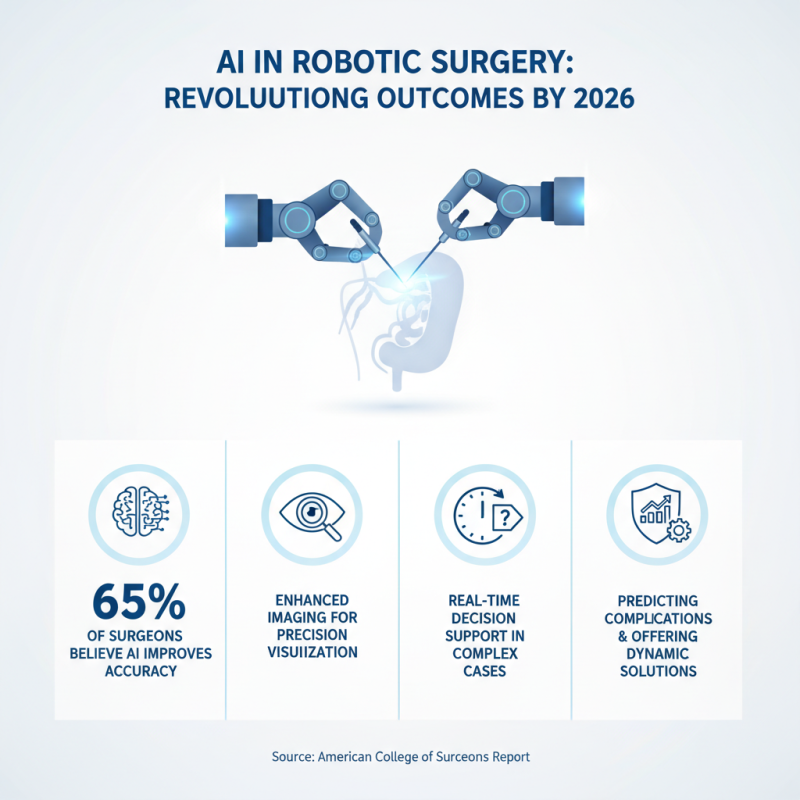
The integration of artificial intelligence (AI) into robotic surgery holds the potential to revolutionize surgical outcomes by 2026. According to a report by the American College of Surgeons, nearly 65% of surgeons believe AI will improve procedure accuracy. Enhanced imaging techniques allow for better visualization during surgery, which aids in precision. Surgeons often face challenges in making real-time decisions, especially in complex cases. AI can assist in predicting complications and offering solutions dynamically.
Moreover, predictive analytics can streamline the surgery process. A study published in the Journal of Robotic Surgery indicates that AI-driven systems can reduce surgery time by approximately 30%. This efficiency could lead to shorter patient recovery times and lower hospital costs. However, the reliance on AI raises concerns about data privacy and ethical implications. The surgical community must openly discuss these aspects to ensure safe and effective use of technology.
Despite the benefits, there are still hurdles to overcome. Training surgeons to work seamlessly with AI tools is crucial. Not every surgical situation lends itself to AI intervention. It’s essential to remember that technology should complement human skill, not replace it. The future of robotic surgery will likely be a blend of innovation and human judgment, addressing both the potential and the limitations of AI.
Training and Education for Surgeons in the Robotic Era
In 2026, the robotic surgery field will advance significantly. Surgeons will need proper training to adapt. The demand for robotic procedures is rising. A report by the American College of Surgeons estimates that minimally invasive procedures could grow by 20% over the next five years. This shift will highlight the importance of education and training.
Surgeons must be equipped with the skills to navigate this technology. Current training programs often fall short. A survey revealed that 70% of surgeons feel unprepared for robotic operations. This gap represents a challenge in enhancing their proficiency. Institutions must focus on hands-on training and simulation-based learning. Incorporating new technologies into curricula is critical.
Tips: Engage in regular workshops. Collaborate with experienced robotic surgeons for mentorship. Emphasize adaptability in training to keep up with technological advancements. Continuous learning is a necessity, given the pace of change. In this evolving landscape, adaptability and commitment will be the keys to success.
Ethical Considerations and Patient Safety in Robotic Surgery
The rise of robotic surgery brings not only innovation but also ethical challenges. Robotic systems are becoming central in various surgical procedures. They promise greater precision, shorter recovery times, and less pain. However, patient safety remains a critical concern. According to a recent report, 50% of patients worry about the transparency of robotic surgery outcomes.
Training for surgeons is essential. Competency varies widely. Some studies suggest a 15% error rate in inexperienced hands. This indicates the need for rigorous certification programs. Robotics can enhance surgical precision, but the human element cannot be overlooked. Every robotic system must include fail-safes to prevent errors.
Communication with patients is vital. Many patients don't fully understand the risks associated with robotic surgery. Clear information can help alleviate concerns. Ethically, informed consent should be prioritized. Surgeons must balance the benefits of technology with the potential for harm. It's a continuous journey to improve both safety and trust.
Future Projections of Minimally Invasive Robotic Surgery in 2026
The chart above illustrates the projected growth in the number of minimally invasive robotic surgeries from 2016 to 2026. It highlights the increasing adoption and advancements in patient safety measures and ethical considerations in robotic surgical practices.