How to Choose the Best New Surgical Robots for Your Hospital?
Choosing new surgical robots for your hospital is a critical decision. The rapid advancements in technology make this choice even more challenging. Hospitals face pressure to provide better patient outcomes. New surgical robots promise higher precision and improved recovery times. However, not all robots are created equal.
When evaluating the options, hospitals must assess their specific needs. Some robots excel in minimally invasive procedures. Others may be better suited for complex surgeries. The budget is also crucial. Investing in new surgical robots can strain finances. Hospitals must weigh costs against potential benefits.
Staff training is often overlooked. Introducing a new surgical robot requires a significant learning curve. Surgeons and staff may need extra practice. This can lead to initial complications. Hospitals should also consider patient feedback. Understanding how new surgical robots affect patient experiences can provide valuable insights. Overall, the decision involves careful thought and reflection.

Identifying the Surgical Needs of Your Hospital
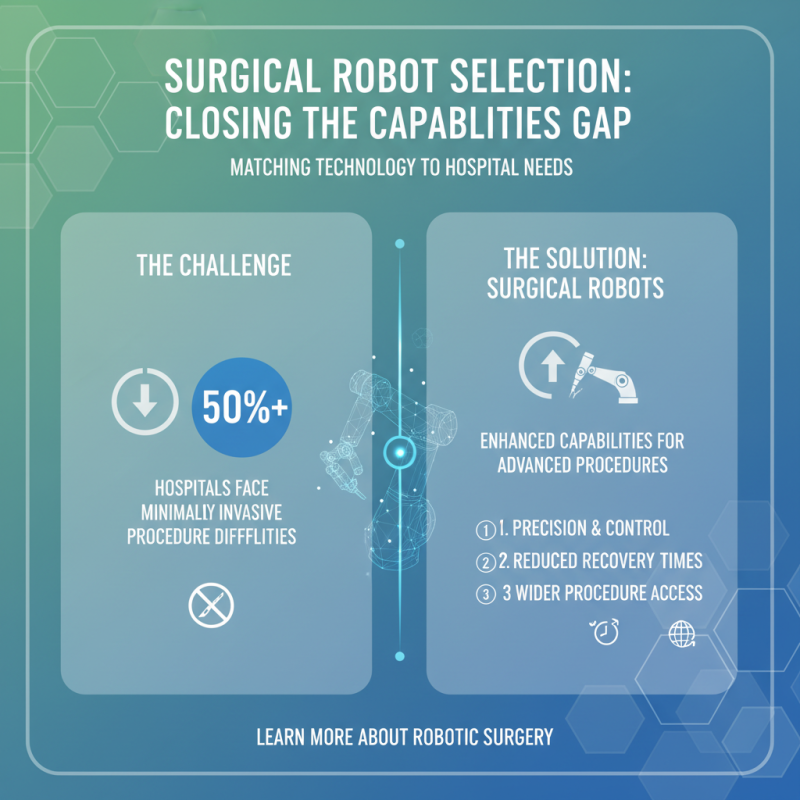
Selecting the right surgical robots requires a thorough understanding of your hospital's specific surgical needs. Recent studies show that over 50% of hospitals report challenges in performing minimally invasive procedures. This indicates a significant gap in capabilities that surgical robots could potentially address.
Assessing current surgical volume is crucial. Data indicates that facilities with higher surgical caseloads often benefit the most from robotic assistance. For instance, hospitals that perform over 1,000 surgeries annually may see improved patient outcomes with robotic systems. However, not all hospitals aligned with this level of demand see a clear path to integration. Many face logistical and training hurdles.
It's important to consider existing surgical specialties. Some hospitals excel in orthopedic or gynecological surgery, where robotic systems shine. Yet, adapting these technologies requires significant investment and effort. Many staff members may feel overwhelmed by the learning curve. Additionally, some surgical teams may resist change, preferring established techniques over new technologies. Balancing innovation and tradition is a continuous challenge.
Evaluating Current Surgical Robot Technology
The landscape of surgical robotics is rapidly evolving. Evaluating current surgical robot technology requires a keen understanding of various features. Key aspects include precision, dexterity, and ease of use. Surgeons need tools that enhance their skills, not hinder them. The intricacy of some devices can become overwhelming, leading to potential errors.
Consider the training requirements as well. Not all surgical robots are intuitive. Complex interfaces can frustrate staff and delay procedures. Time spent learning a new system might overshadow patient care. Hospitals must weigh the learning curve against the potential benefits.
Cost is also a significant factor. While some robots promise advanced capabilities, pricing should be justifiable. Budget constraints can impact a hospital's ability to update its surgical tech. Investing in technology should align with actual surgical needs and patient outcomes. Overlooking these elements can lead to regret further down the line. Ultimately, it's not just about having the latest device; it's about making informed choices that enhance surgical success.
Comparing Manufacturer Options and Specifications
When selecting a new surgical robot for your hospital, examining manufacturer options and specifications is crucial. Different robots come with various features, and understanding these can significantly impact surgical outcomes. Key specifications often include the robot's operational range, precision, and ease of use. Some systems may boast advanced imaging technology, while others focus on instrument versatility. Evaluating these factors thoroughly helps narrow down the choices.
**Tip:** Create a comparison chart. List each surgical robot’s specifications side by side. This visual aid can make it easier to see strengths and weaknesses.
Budget consideration is another critical factor, which can affect options. Cutting-edge technology often carries a higher price tag. However, it's essential to weigh costs against potential benefits. A less expensive model may not provide the same level of precision or support for complex surgeries. Reflect on the long-term value—upfront costs aren't the only aspect to consider.
**Tip:** Involve your surgical team in discussions. Their insights can highlight practical needs that you might overlook.
Purchasing a surgical robot is a significant investment. Mistakes in your choice can lead to operational challenges. It's crucial not to rush this process. Take time to evaluate each robot’s capabilities and ensure they align with your hospital's specific needs.
Comparison of Surgical Robot Features
Assessing Training and Support Programs
Choosing the right surgical robots for your hospital involves careful consideration of training and support programs. These factors can significantly impact the effectiveness and safety of robotic surgeries.
Training programs should be thorough. They should cover both operational techniques and maintenance. Look for programs that offer hands-on training. This helps the surgical team feel more confident. A good program will also include simulations. Realistic practice environments prepare staff well. Support is crucial, too. Ensure that the provider offers ongoing assistance. It is essential for troubleshooting and technical questions.
Tip: Always ask about the training length. Some programs may seem comprehensive but are actually brief. Longer programs often yield better results. Consider how quickly your staff needs to be trained.
Tip: Evaluate the feedback from other hospitals. Their experiences can provide valuable insights. Learning from their challenges can help you avoid similar issues.
Effective training and support are vital to maximize the benefits of surgical robots. Reflect on what you need. Consider the learning pace of your team. Prioritize a program that fits those needs, while maintaining the highest safety standards.
How to Choose the Best New Surgical Robots for Your Hospital? - Assessing Training and Support Programs
| Surgical Robot Model |
Training Duration (Days) |
On-Site Support Availability |
Remote Support Features |
Cost of Training Program ($) |
User Satisfaction Score (0-10) |
| Model A |
5 |
Yes |
Video call support, online resources |
3000 |
9 |
| Model B |
4 |
Yes |
Chat support, knowledge base |
2500 |
8 |
| Model C |
6 |
No |
Email support only |
4000 |
7 |
| Model D |
3 |
Yes |
24/7 phone support |
2000 |
10 |
Budgeting and Financing Considerations for Acquisition
When considering the acquisition of new surgical robots, budgeting and financing are critical aspects. According to a recent industry report, around 60% of hospitals face financial constraints while purchasing these advanced technologies. The initial cost of a surgical robot can range from $1 million to over $2 million. Installation and training add further expenses, impacting overall budgets significantly.
Tips: Assess your hospital’s financial health early on. Consider both upfront and ongoing costs in your budget. Explore potential funding sources, like grants or partnerships, which can alleviate financial pressure.
Additionally, hospitals should evaluate the return on investment (ROI) from integrating surgical robots. A study found that hospitals experiencing improved surgical outcomes saw a 20% increase in patient throughput. However, this increase doesn't happen instantly. Sometimes, hospitals must adjust their operational protocols to maximize the benefits of new equipment. Allocate resources for continuous training and support for surgical teams.
Tips: Analyze data from current surgical procedures to quantify expected benefits. Monitor the impact on surgical times and patient recovery rates post-acquisition. This data can guide future investments.